From Low-Code to AI-Assisted Operations: What Copilot Adds to the Microsoft Power Platform

Akash
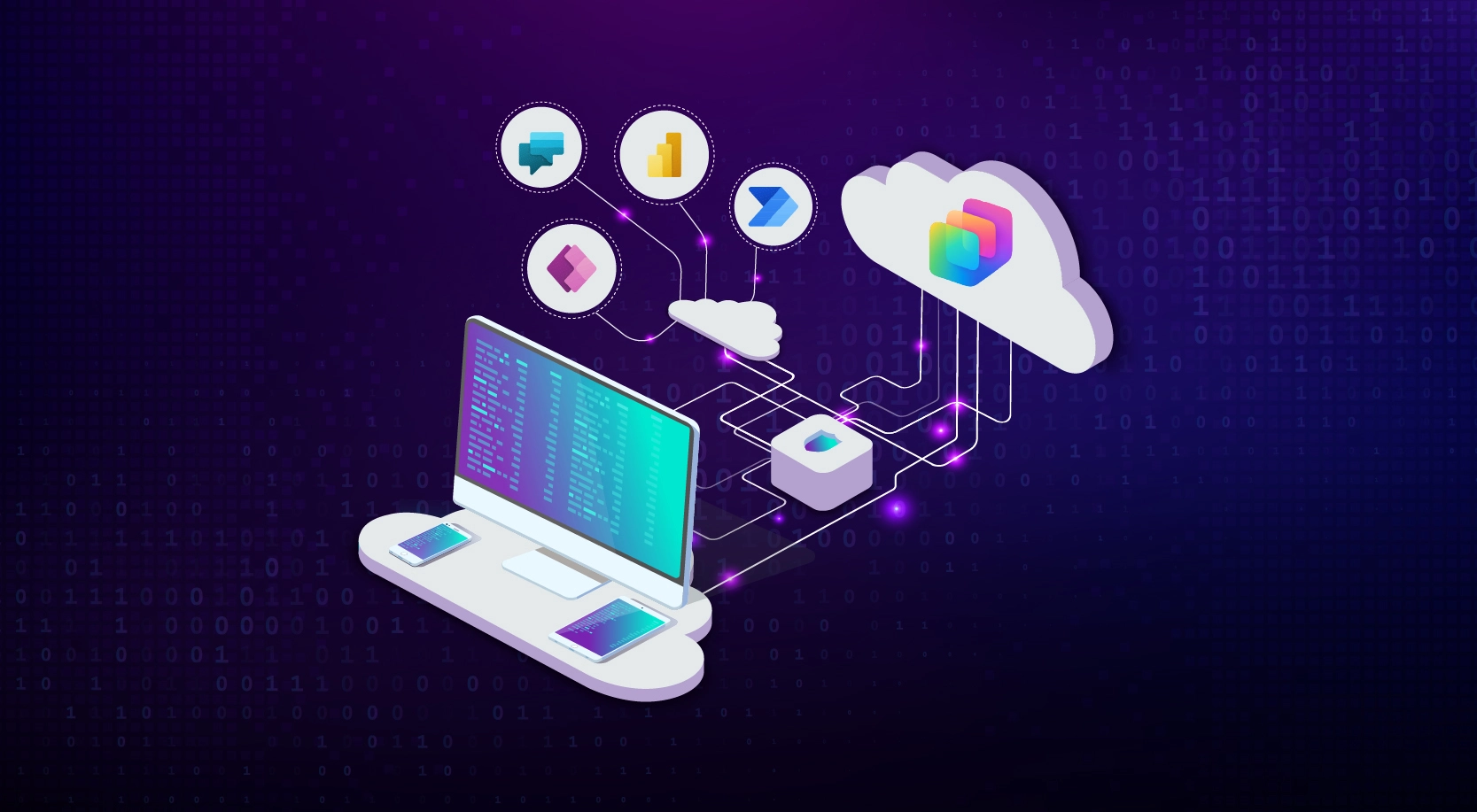
The Power Platform was designed so business teams wouldn’t have to wait months for IT to deliver solutions. It proved effective for everyday tasks. Teams built request forms, automated approvals, and even set up Monday dashboards without needing to code. The platform lived up to expectations. In its FY25 Q3 results, Microsoft said that Power Platform has 56 million monthly active users and described it as the most widely adopted low-code platform. With the introduction of Microsoft Power Platform Copilot, the capabilities of the platform extend even further.
The real challenge arises when decisions have to be made. Although a workflow can pass on a contract to the correct person, it is incapable of reading the contract, checking it against your standards, or identifying any clauses that could cause problems in the future. That part of the work stayed with people because traditional low-code automation could follow rules, but it could not interpret information or make a judgment. Automation has therefore been very useful for routine tasks, but more complicated work still has to depend on skilled employees.
Copilot is changing how we approach this kind of work. Think about the questions people ask it. In a Microsoft study of over 100,000 Copilot conversations, 49% involved cognitive tasks. People were using Copilot to understand information and draw conclusions. This type of work used to rely mostly on skilled employees. Now, there’s a tool that can help. To see why, it’s useful to look at how Copilot developed.
This advancement allows users to leverage AI for more complex tasks, making the process smoother and more efficient, highlighting the significance of Microsoft Power Platform Copilot in modern workflows.
What Does Copilot add to Microsoft Power Platform?
Microsoft Copilot adds generative AI and AI agent capabilities to Microsoft Power Platform, helping applications and workflows interpret business information, identify relevant insights, and initiate actions. Unlike traditional rule-based automation, Copilot-enabled solutions can handle less structured requests while keeping human oversight in place for decisions that require judgment or accountability.
How Microsoft Copilot is Changing the Power Platform
Microsoft launched Power Virtual Agents in 2019 to help people with little or no coding experience. Users could set up trigger phrases and build conversation flows using a visual designer. If the bot needed to get data or send an email, it relied on Power Automate.
The tool was effective for FAQ bots and simple service desks. However, if you asked something it was not programmed for, it usually could not answer.
In November 2023, Microsoft moved Power Virtual Agents into Copilot Studio. The most important change was not just the new name, but the new underlying model.
You no longer need to script every conversation. The agent can answer questions by using sources such as a SharePoint library, a Dataverse table, or other connected data. Generative models help it understand your requests and respond with the information it finds. Scripted topics are still useful for tasks that follow a set process, but now the agent can figure out what you need before deciding what to do.
This marks a major change. Traditional automation sticks to steps set ahead of time. Copilot-enabled solutions can understand information, make an initial judgment, and choose what to do next. What began as a tool for building chatbots has now become a platform for agents that help with business processes.
How Copilot Enables AI-Powered Business Process Automation
Low-code puts app-building in more hands. AI-assisted operations lets those apps make the first call instead of just moving work along. In the right process, users can state what they need, and the system can interpret the request, gather relevant information, make an initial assessment, and trigger the next step. Up to now, carrying out these tasks generally required a human to read the request and decide what action to take.
Leaders should note that the conversation has shifted. That changes the design question for IT. The issue is no longer just what can be automated, but what decisions can safely be delegated, what evidence the agent needs, and where a person must remain accountable.
However, there is an important limitation. While Copilot can help connect a business need to a working process, it does not take away anyone’s responsibility for the results.
The value you get from automation depends on a few basics. You need clean source data, a clear standard to check the agent’s work, and someone to handle exceptions—because there will always be some. If you skip these steps, automation won’t fix a bad decision. It will just make the mistake faster and with more confidence.
Real-World Use Case: Automating Contract Review with Copilot Studio
The legal team at a global software company we worked with was having trouble keeping up with a rising number of contracts. Every year, they managed thousands of agreements with customers and suppliers. Each time a contract was up for renewal, a lawyer needed to review it, especially if any clauses were different from the usual template.
We worked with them to create a solution using Copilot Studio and Power Platform, making sure their legal and security needs were covered from the start. Right within Copilot Studio, we selected the generative model best suited to legal review, and Microsoft Entra manages access so the agent only gets the information needed for each task. The same governance controls already protecting their other Power Platform apps extend to the agent. Human oversight was included from the beginning.
The AI agent reviews each contract, compares it against the legal playbook, identifies any differences, and suggests changes. A legal team then looks at the flagged items and decides what to do. The same agent is also surfaced directly inside Microsoft Word, so when a contract comes back with changes, the lawyer can compare the updated version against the original, review the suggested edits in context, and make further updates on the spot. The AI does the first review, but the legal team still makes the final call.
This change has made a real difference. Review time is now about 50% shorter, and the team can handle over 15,000 contracts without starting each one from scratch. The team is now looking after a significantly greater amount of contract work without bringing in any additional reviewers. Compliance is also more consistent because every contract gets the same first review before a lawyer steps in.
Lawyers are still closely involved, but their role has changed. Instead of spending time on routine reviews, they can now focus on the smaller group of contracts that really need their legal expertise.
This is what AI-assisted operations can do. It’s not just about needing fewer people. It’s about making sure their time goes to the work where judgment, context, and accountability are most important.
How to Get Started with AI Agents in Microsoft Power Platform Copilot
WinWire helps clients solve this problem. We work with teams to pick the best process to start, letting an agent handle the first review while a person makes the final decision. We build the solution in Copilot Studio and Power Platform, using your existing governance and security controls.
Low code is about who can build software. AI-assisted operations go further by looking at what the software can do once it is up and running.
Begin with the task that takes up valuable time from your key people. Send us the process that is making your most expensive employees work underground. We’ll help you determine if it’s suitable for an agent and what conditions must be met before you turn anything on.